This post may contain affiliate links. Please read our disclosure policy.
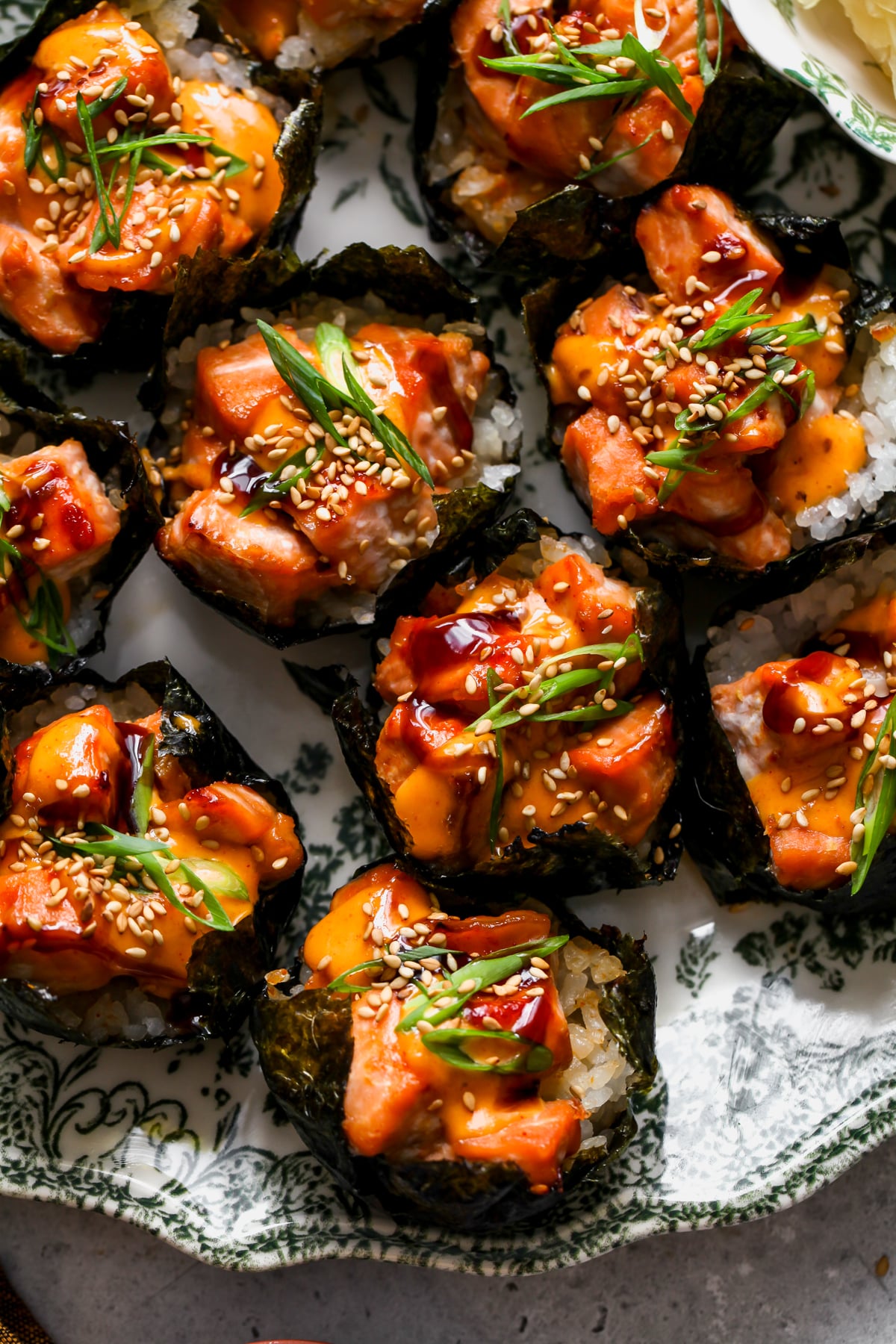
If you’re craving sushi at home, try these Baked Salmon Sushi Cups, which feature ponzu-ginger marinated salmon baked over seasoned sushi rice in crispy nori cups. Topped with creamy sauce and fresh garnishes, they’re a fun and easy way to satisfy the craving without any rolling required!
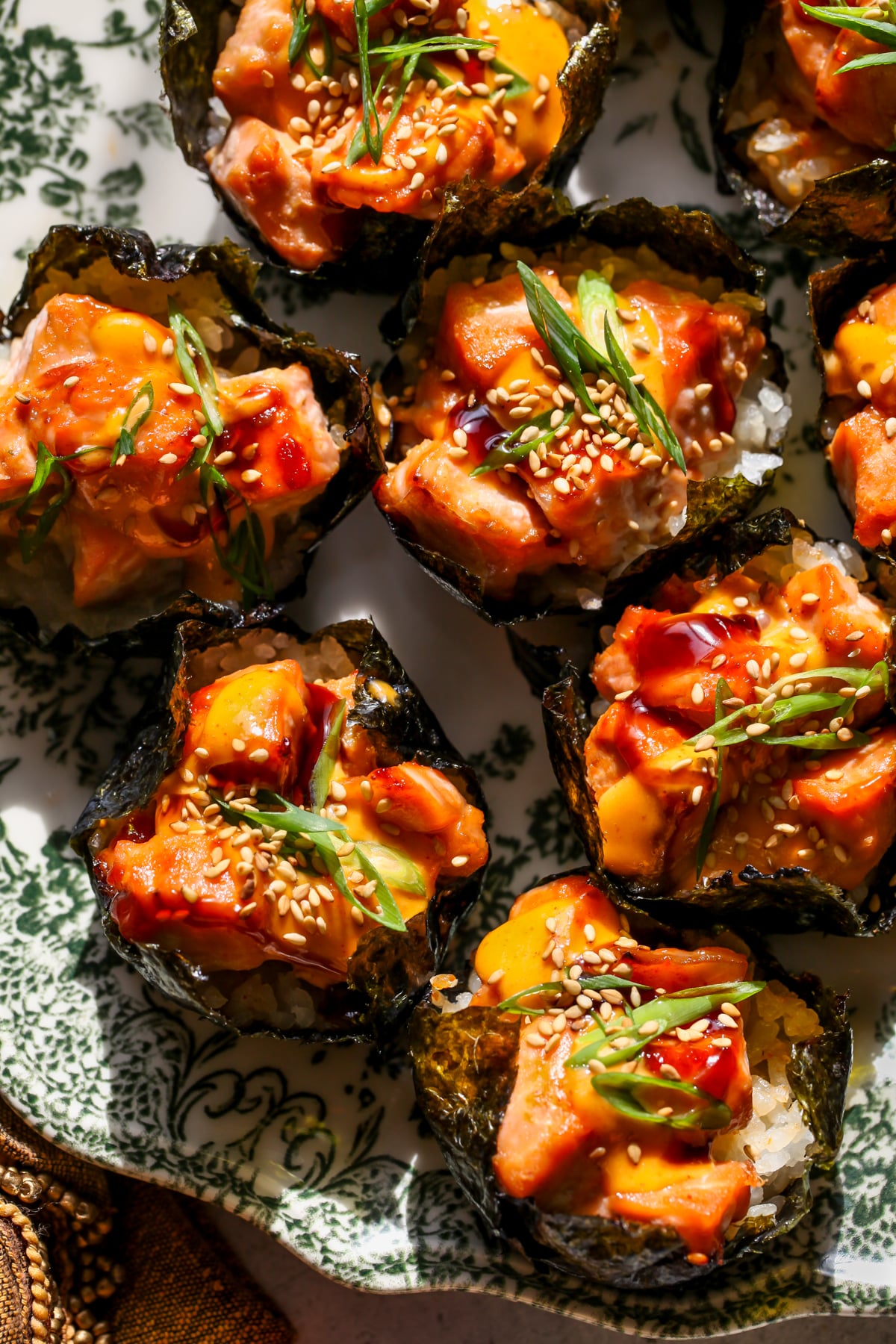
Table of Contents
Why You’ll Love these Salmon Sushi Cups
- Classic flavors of sushi. Enjoy everything you love about your favorite baked sushi roll in a fun, handheld format that’s easy to assemble.
- Easy to customize. Switch up the sauces or garnishes, add more or less spice, or even experiment with a different fish to suite your craving.
- Perfect for entertaining. These individual sushi cups make a fun, crowd-pleasing appetizer that’s easy to serve and share. (They’re equally delicious as a weeknight dinner!)
- Feel-good, fill-you-up ingredients. Salmon is an excellent source of protein and omega-3 fats, making these sushi cups equally nourishing and filling.
The sushi craving strikes quite often in our house, and instead of always leaning on takeout, I try to come up with satisfying alternatives to make at home.
Just like my Salmon Sushi Bake and Salmon Sushi Bowls, these Salmon Sushi Cups offer all the crave-worthy flavors without special technique or tools.
They feature ponzu-ginger marinated salmon, seasoned sushi rice, and crisp nori all baked in a muffin tin!
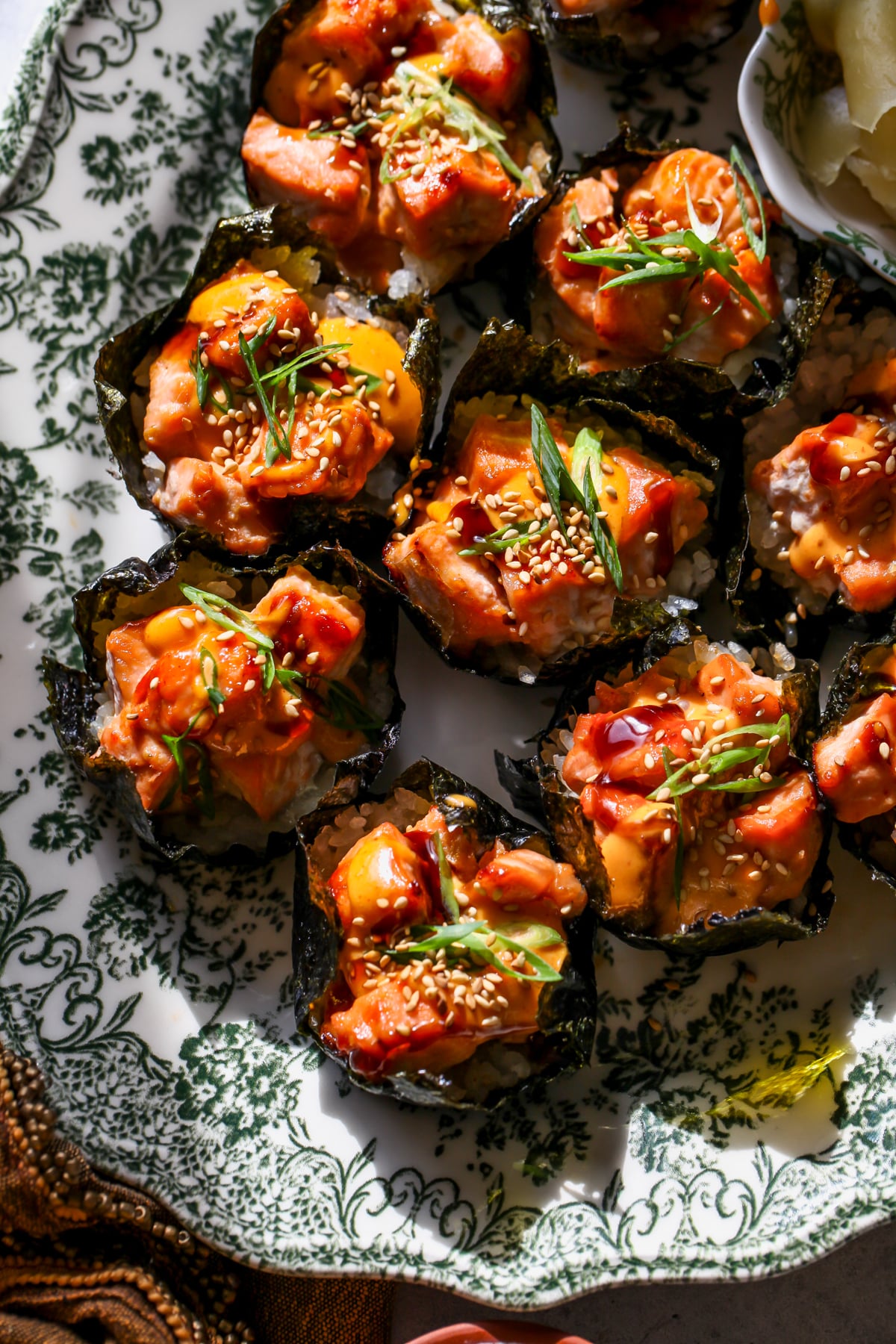
You can customize the toppings to your likings, however I love adding a creamy chili sauce, eel sauce, scallions, and sesame seeds for extra texture.
For more weeknight-friendly salmon recipes, check out my Miso-Ginger Salmon, Salmon Patties, and Hot Honey Salmon Bowls.
The Ingredients
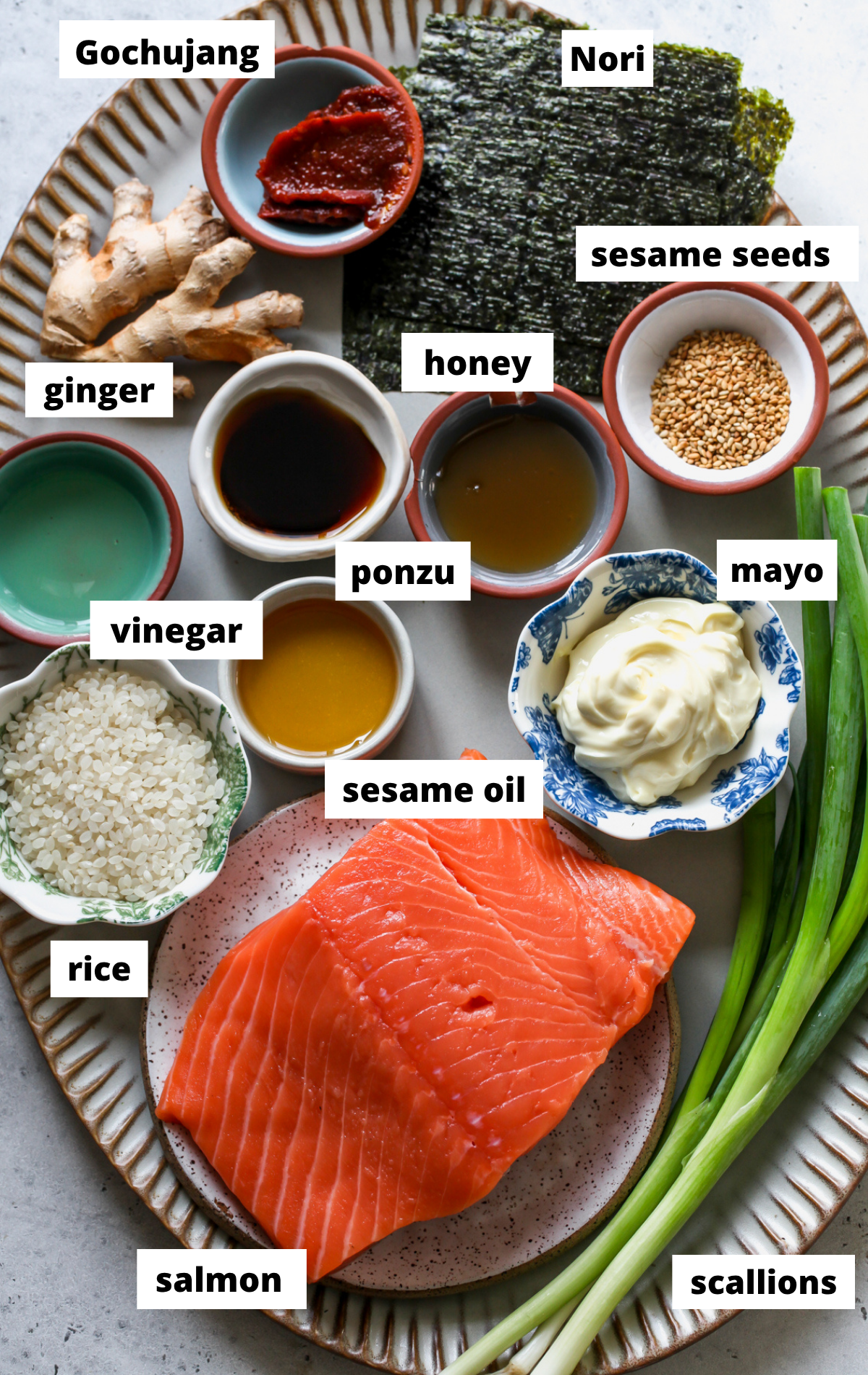
- Salmon: You need 1 pound of fresh, skinless salmon, which is cut into small cubes. I suggest asking your fishmonger to remove the skin for you for ease of prep.
- Ponzu: A citrusy, soy-based sauce that brings a beautiful balance of umami and brightness to the salmon. Alternatively, you can use tamari or soy sauce.
- Sesame oil: Look for toasted sesame oil, which adds rich, nutty depth.
- Ginger: Fresh ginger is key in adding fragrant, slightly spicy warmth to the salmon.
- Honey: Balances the salty, tangy notes of the ponzu and helps the salmon develop a caramelized finish as it bakes.
- Rice: Short-grain white rice (sushi rice) has a naturally sticky texture that helps the cups hold together. Season with vinegar, sugar, and salt for that classic sushi rice flavor.
- Rice Vinegar: Adds acidity to balance the richness of the mayo.
- Gochujang: A Korean fermented chili paste that’s slightly spicy, sweet, and savory. If you can’t find it, you can use any kind of chili-garlic sauce or Sriracha.
- Mayo: Creates a rich, creamy base for the sauce. Alternatively, you can use plain Greek yogurt for less fat and extra protein.
- Nori: These roasted seaweed sheets form the base of the sushi cup, adding a delicate savory flavor and lightly crisp texture.
- Toppings: I love adding a drizzle of eel sauce (also known as unagi sauce) for a savory-sweet finish, sesame seeds for crunch, and scallions for vibrancy and freshness.
For a complete list of recipe ingredients and quantities, see the recipe card below.
The Directions
Step 1: Prepare Sushi Rice
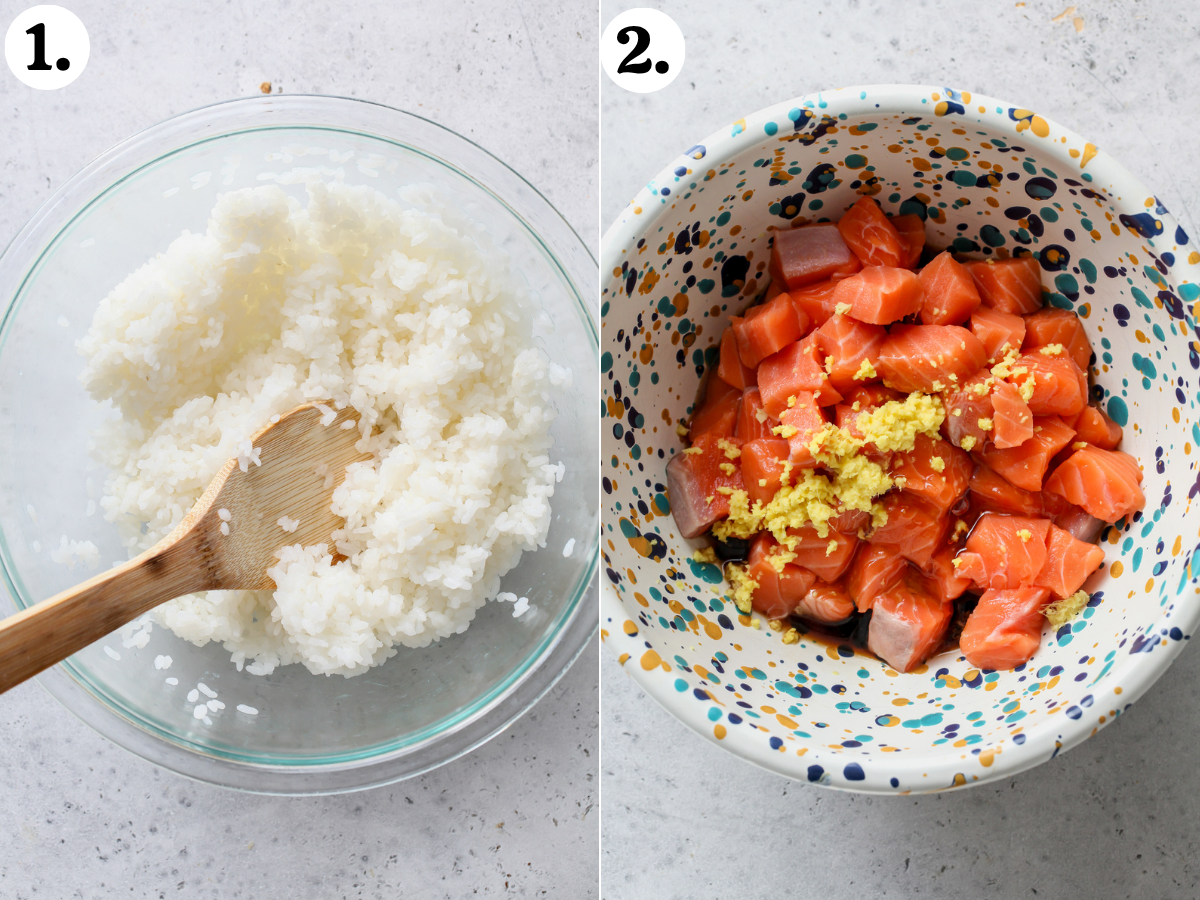
Rinse the rice and place in a medium saucepan. Add 1 1/2 cups water and bring to a boil. Reduce heat to low, cover, and simmer for 15 minutes. Remove from heat and let sit, covered, for 10 minutes to steam.
Meanwhile, combine rice vinegar, sugar, and salt in a small bowl and microwave for 30 seconds to dissolve sugar.
Transfer rice to a large mixing bowl and fold in the vinegar mixture. Let cool until warm (not hot) before assembling sushi cups.
Step 2: Marinate Salmon
Place salmon cubes in a large mixing bowl and add ponzu, sesame oil, honey, and ginger; gently stir to combine.
Step 3: Prepare Nori. Using kitchen scissors, cut each Nori sheet into 4 squares. Make 1-inch slits in the center of each of the four sides.
Step 4: Add a scoop of warm sushi rice in the center of each piece of nori.
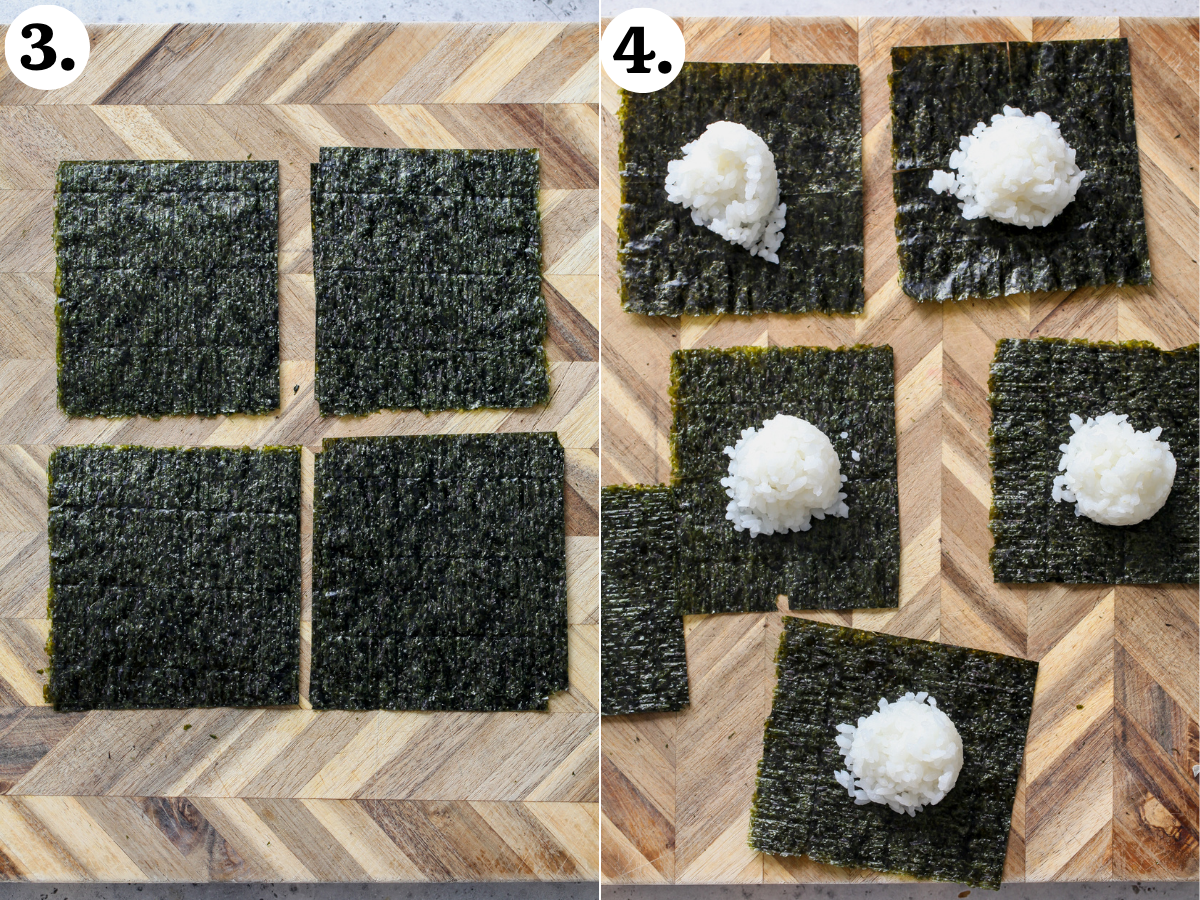
Step 5: Transfer nori and rice into the cups of a muffin tin.
Step 6: Create a well in the center of each rice cup using the back of a measuring spoon.
Recipe Tip
Grease the back of a Tablespoon measuring spoon and press it firmly into the center of the rice in each nori cup. This helps push the rice up the sides of the nori, and creates a small well for the salmon.
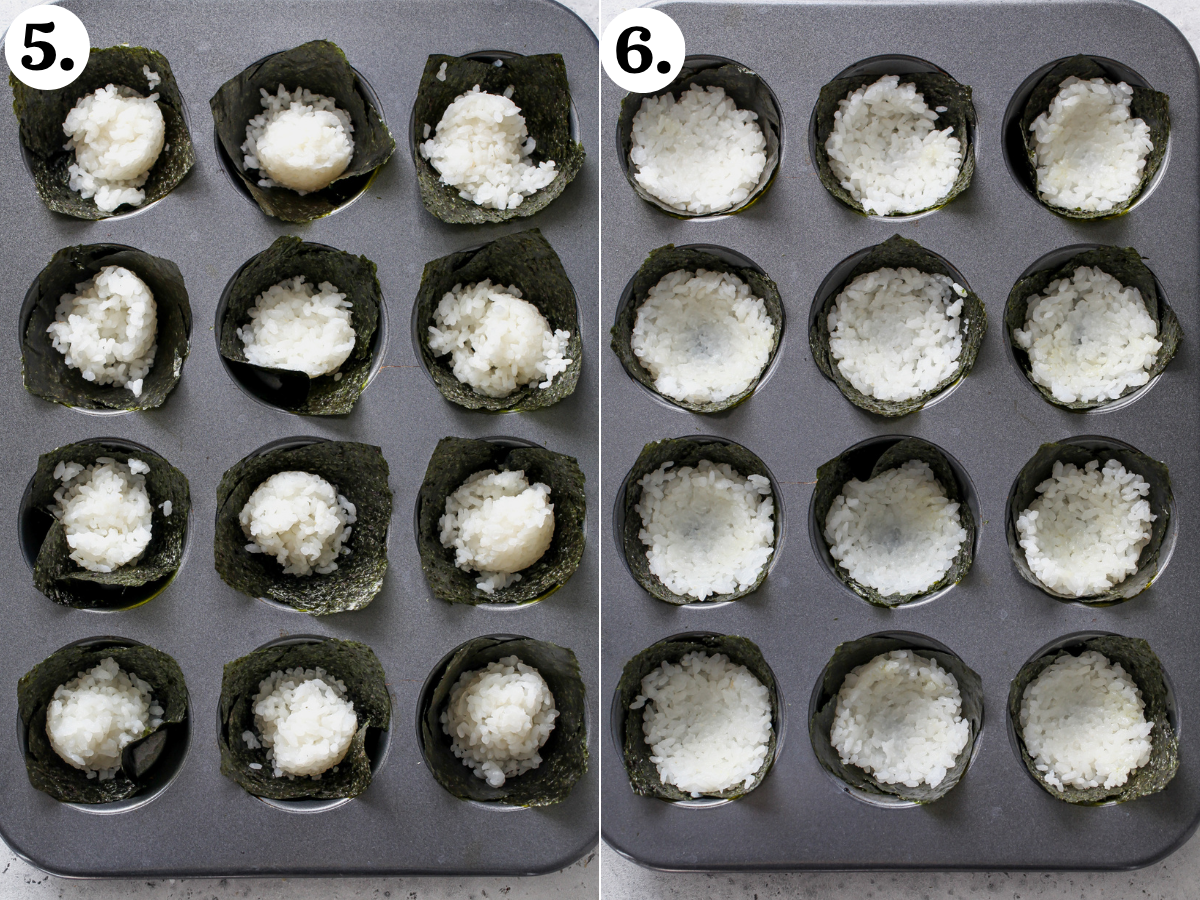
Step 6: Add salmon mixture into each rice cup.
Step 7: Bake at 400ºF for 12 to 14 minutes, broiling during the final 1 to 2 minutes to help caramelize.
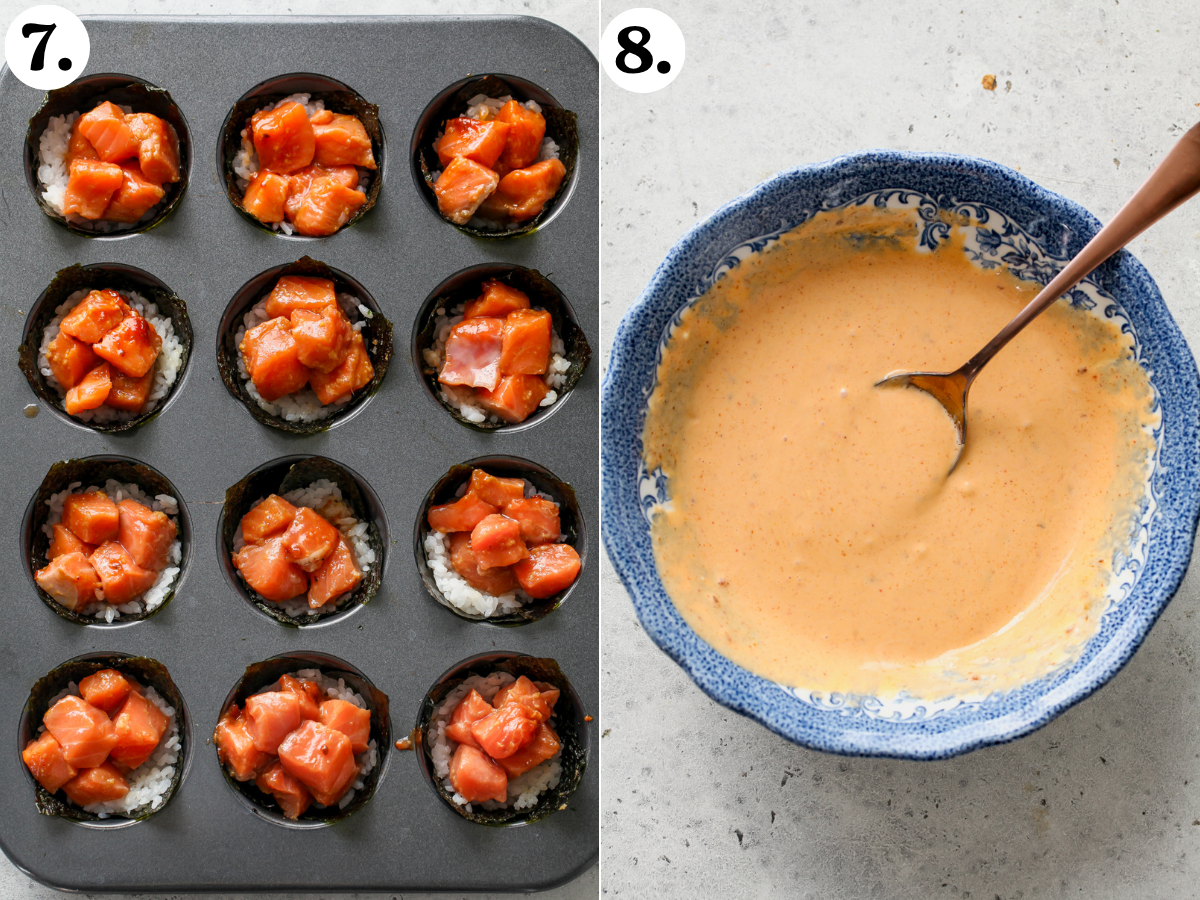
Step 8: Mix Gochujang sauce in a small mixing bowl until smooth.
Lastly, add sauce and toppings of choice to salmon sushi cups and serve warm.
Recipe Variations
- Make them spicy. For an extra kick of spice, add 1 to 2 teaspoons of sriracha or chili crisp to the salmon mixture before baking.
- Use a different fish. Swap the salmon for shrimp or firm tofu. Or, add a California roll twist by using cooked or imitation crab.
- Switch up the sauce. Instead of gochujang aioli, try spicy sriracha mayo, wasabi mayo, or a creamy avocado-lime sauce.
- Add something crunchy. Top each salmon sushi cup with crispy fried shallots, pickled cucumber, or toasted panko for extra crunch.
- Make gluten free. Swap the ponzu for tamari, which is a gluten free alternative to soy sauce.
Recipe Tips and Tricks
- Start with warm sushi rice. Adding the rice to the nori before transferring it to the muffin tin is key. The warmth and moisture of the rice helps soften the nori, making it more pliable.
- Don’t skip the slits in the nori. Cutting small, 1-inch slits into the center of each side of the nori squares allows the edges to overlap and fit snugly into the muffin tin without tearing.
- Cut the salmon into uniform pieces. Aim for roughly 1/2-inch cubes so the salmon cooks evenly.
- Don’t overfill the cups. Leave the edges of the nori exposed to allow them to crisp up in the oven.
- Add the sauces after baking. Wait until the sushi cups comes out of the oven before drizzling with sauce(s) to preserve their creamy consistency.
Make-Ahead and Storage Tips
- Make-Ahead: You can prepare the gochujang sauce up to 3 days ahead. Refrigerate until ready to serve the sushi cups.
- Store: Refrigerate leftover salmon sushi cups in an airtight container for up to 2 days. For the best results, store the sauces and garnishes separately to prevent the nori from becoming soggy.
- When it comes to enjoying leftovers, I suggest removing them from the fridge about 30 minutes before eating to remove the chill. Enjoy chilled or closer to room temperature. If you prefer them warm, you can gently rewarm in a 300ºF oven for 7 to 10 minutes.
More Sushi-Inspired Salmon Recipes

Mango-Salmon Sushi Bake

Salmon Sushi Bowls

Sesame Salmon Rice Bowl with Ginger Sauce

Sesame Crusted Salmon Bowls
If you try these Salmon Sushi Cups, snap a photo and tag #dishingouthealth so I can see your creations. Also, follow along on Facebook and Pinterest for the latest recipe updates!

Salmon Sushi Cups
Equipment
- Medium Saucepan with Lid
- Mixing bowls
- 12-Cup Muffin Tin
Ingredients
Sushi Rice
- 1 cup short-grain sushi rice, rinsed
- 2 Tbsp. rice vinegar
- 2 tsp. granulated sugar
- 1/2 tsp. kosher salt
Ginger-Ponzu Salmon
- 1 lb. fresh salmon, skin removed
- 2 Tbsp. ponzu (sub tamari or soy sauce)
- 1 Tbsp. toasted sesame oil
- 1 Tbsp. honey
- 2 to 3 tsp. freshly grated ginger
Sushi Cups
- 3 sheets Nori (roasted seaweed sheets)
- Thinly sliced scallions for garnish
- Toasted sesame seeds for garnish
- Eel or unagi sauce ("sushi sauce") for garnish
Creamy Gochujang Sauce
- 1/4 cup mayonnaise
- 1 to 2 Tbsp. gochujang, depending on desired level of spice (sub sriracha)
- 2 tsp. rice vinegar
- 1 tsp. toasted sesame oil
- 1/2 tsp. granulated garlic (or garlic powder)
- Kosher salt to taste
Instructions
- Preheat oven to 400ºF.Prepare Sushi Rice: Place rice in a medium saucepan and add 1 1/2 cups water. Bring to a boil, cover with a tight-fitting lid, and reduce heat to maintain a gentle simmer. Simmer for 15 minutes, or until the water is absorbed. Remove from heat and let stand, covered, for 10 minutes to allow rice to steamIn a small microwave-safe bowl, combine rice vinegar, granulated sugar, and salt; mix well. Microwave for ~30 seconds to dissolve sugar.Transfer cooked rice to a wide, shallow bowl and gently fold in vinegar mixture using a rice paddle or rubber spatula. Let cool until warm (not hot) before assembling rice cups.
- Marinate Salmon: While the rice simmers, begin preparing salmon by cutting it into small 1/2-inch cubes and placing in a large mixing bowl. Add ponzu, toasted sesame oil, honey, and fresh ginger; gently mix to combine. Let sit for 10 to 15 minutes before assembling sushi cups.
- Prepare Nori: Using kitchen scissors, cut each nori sheet into 4 equal squares. Make a 1-inch slit in the center of each of the four sides of every square. (These slits allow the nori to overlap and confirm to the muffin cups without cracking or tearing.)
- Assemble Sushi Cups: Arrange the nori squares on a cutting board and place a scoop (~1 1/2 to 2 Tablespoons) of warm sushi rice in the center of each. Carefully transfer the nori and rice into the wells of a lightly-greased muffin tin, allowing the edges of the nori to overlap as needed. (The warmth and moisture of the rice will help soften the nori, making it more pliable and easier to shape.)Lightly grease the back of a tablespoon measuring spoon with cooking spray or oil. Press it firmly into the center of the rice in each cup, creating a small well for the salmon. (This also helps push the rice up the sides of the nori, forming a sturdy base for the filling.)Divide the marinated salmon mixture evenly among the cups, spooning into the wells in the rice.Bake at 400ºF for 12 to 14 minutes, broiling during the final 1 to 2 minutes for a more caramelized finish, until the salmon is cooked through and the edges of the nori are lightly crisp.
- Prepare Gochujang Sauce. While the sushi cups bake, prepare sauce by combining all ingredients (mayo, gochujang or sriracha, rice vinegar, toasted sesame oil, and garlic) in a medium mixing bowl; mix until smooth. Season to taste with a pinch of kosher salt.
- Assemble Sushi Cups. Lift sushi cups out of muffin tin either by lifting the edges of nori or running a small offset spatula (or butter knife) around the edges to loosen. Carefully lift each cup out of tin and transfer to a serving platter.Spoon Gochujang Sauce overtop and drizzle with eel or unagi sauce. Scatter sliced scallions overtop and finish with a sprinkle of toasted sesame seeds. Serve warm.
Notes
- Make them spicy. For an extra kick of spice, add 1 to 2 teaspoons of sriracha or chili crisp to the salmon mixture before baking.
- Use a different fish. Swap the salmon for raw shrimp or firm tofu.
- Switch up the sauce. Instead of gochujang sauce, try spicy sriracha mayo, wasabi mayo, or a creamy avocado-lime sauce.
- Add something crunchy. Top each salmon sushi cup with crispy fried shallots, pickled cucumber, or toasted panko for extra crunch.
- Make gluten free. Swap the ponzu for tamari, which is a gluten free alternative to soy sauce.
- Make-Ahead: You can prepare the Gochujang Sauce up to 3 days ahead. Refrigerate until ready to serve the sushi cups.
- Store: Refrigerate leftover sushi cups in an airtight container for up to 2 days. For the best results, store the sauces and garnishes separately to prevent the nori from becoming soggy.
- When it comes to enjoying leftovers, I suggest removing them from the fridge about 30 minutes before eating to remove the chill. Enjoy chilled or closer to room temperature. If you prefer them warm, you can gently rewarm in a 300ºF oven for 7 to 10 minutes.